News
Life Design in teaching: A creative method to enhance student wellbeing and direction
Published online: 01.10.2025
News
Life Design in teaching: A creative method to enhance student wellbeing and direction
Published online: 01.10.2025
Life Design in teaching: A creative method to enhance student wellbeing and direction
News
Published online: 01.10.2025
News
Published online: 01.10.2025
By Laura Johanne Schou Carlsen, AAU Communication and Public Affairs
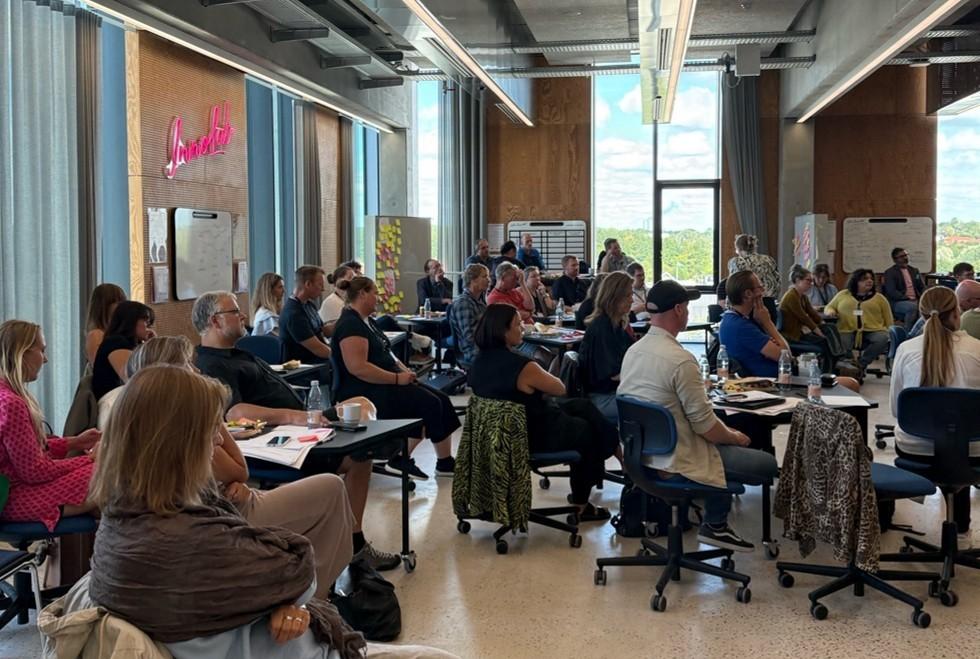
Photo: Laura Johanne Schou Carlsen, AAU Communication and Public Affairs
At Aalborg University, 50 participants from across the university - including representatives from TECH, ENG, SUND, IAS PBL, UCPBL, AAU Education and the student body – participated in a three-day workshop where they experienced the Life Design method first-hand. The goal was to provide teachers with insights they can bring into their teaching – and to create a safe space where students can explore their values and learn to see uncertainty as a natural part of the process.
Life design was developed at the Stanford Life Design Lab and is based on the principles of Design Thinking – a creative problem-solving method that focuses on understanding needs, generating ideas, and testing solutions. Instead of finding the ‘right’ answer, the method encourages exploring multiple paths and learning through small experiments. In Life Design, the ‘user’ is yourself. The method invites you to reflect on what is important to you, what opportunities you can explore, and how you can test your ideas about the future.
During the workshop, exercises and conversations created a space for reflection, academic engagement, and life choices.
After three days of immersion in the Life Design method, the educators have now experienced how reflection and creativity can generate new perspectives – not only for themselves, but also for their students. Several participants shared their thoughts on how Life Design can be integrated into teaching and contribute to both personal and academic growth.
Associate Professor Maj-Britt Quitzau from the Department of Sustainability and Planning, who also serves on the study board and works with quality assurance, sees Life Design as an important counterbalance to the answer-oriented approach many students encounter.
“Students sometimes think that education is a list of correct answers. Life Design is a liberation from that – an opportunity to discover one’s own profile and strengths.”
For Rasmus Nørluf, a PhD student at the Department of Architecture, Design and Media Technology, who is just beginning his career in teaching, Life Design offers a way to create more engaging teaching – even in technically demanding subjects.
“Stepping completely out of your comfort zone and viewing yourself and your work from a different angle has provided new and exciting insights – which can lead to better ideas.”
He plans to use exercises from the workshop to create more dialogue and creativity – for example, through music and group exercises that encourage divergent thinking and reflection.
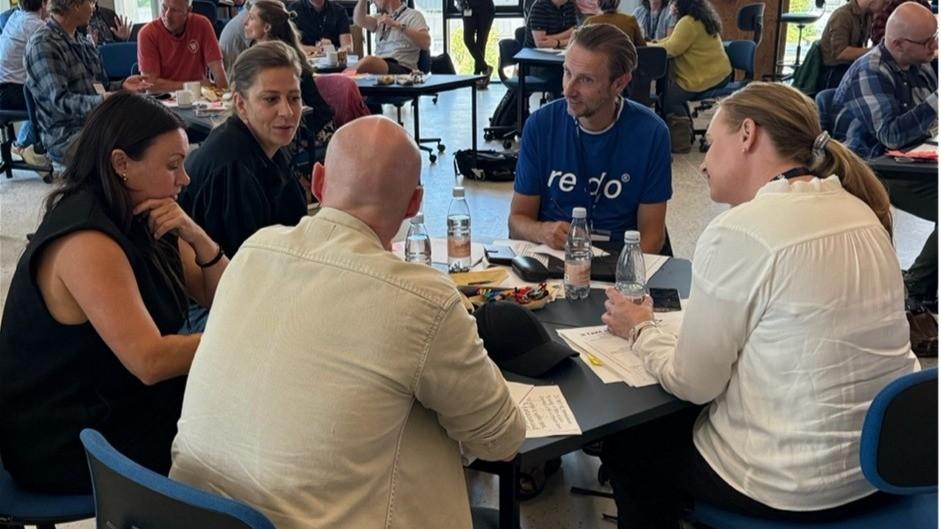
For other participants, Life Design has opened new ways of thinking about career and creativity – and how teaching can inspire nontraditional ideas and new perspectives. Associate Professor Lars Domino Østergaard from the Department of Health science and Technology teaches master students and wants to work more with career awareness. He sees Life Design as a method to encourage creativity and innovation:
During the workshop, he was particularly inspired by exercises like odyssey mapping and association-based mind maps, which opens for nontraditional ideas and new perspectives on education.
Life Design can be part of larger teaching programs or standalone activities in selected modules. It does not require major restructuring. On the contrary, the method can be integrated through small steps and exercises that create reflection and open new perspectives for students.
An example is the use of icebreaking exercises, which both activate students and set a new framework for conversation and reflection. Associate Professor Markus Löchtefeld has had positive experiences in using these types of exercises as an introduction to Life Design in teaching.
Examples include:
The most important thing is to give students an opportunity to think out loud, test ideas, and discover new ways – without the pressure of finding the ‘right’ answer.
Overall, the educators point out that Life Design can help create a more open and reflective educational environment. It is not about replacing existing methods but about supplementing them with new approaches that allow for personal development and academic curiosity.
At leadership level, Life Design also resonates with AAU’s educational foundation. Louise Bilenberg Pape-Haugaard, Vice Dean of the Technical Faculty, highlights how the method can strengthen the existing problem-based learning model while bringing new energy into teaching:
“Life Design gives us new perspectives and concrete steps to strengthen students’ wellbeing and sense of belonging. It has been inspiring to see how participants – across roles and departments – engage with the method with curiosity and energy. I hope they carry the experience forward and become role models and ambassadors for an approach that can create more meaningful and sustainable learning environments.